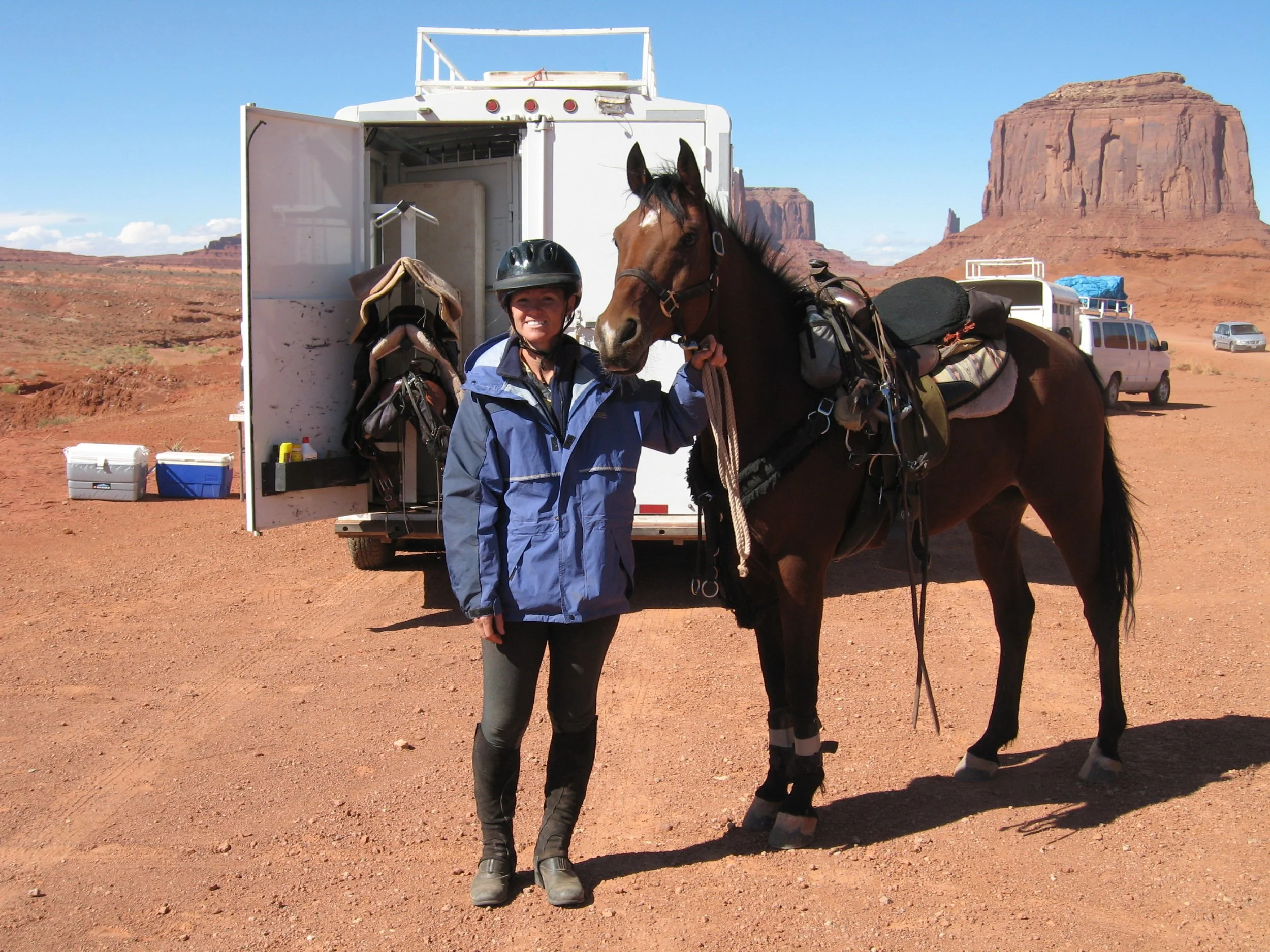
There is something special about a good trail horse.
The kind that meets you at the gate with a soft eye and a quiet mind. The kind that walks out confidently, ears flicking back to listen as you chat with friends or while you just soak in the quiet of the woods. The kind that climbs hills without complaint and picks their way carefully down the other side—because they understand their job and know it matters.
Those horses become our partners. They carry us through forests and fields, across creeks and up mountains. They take us places most people will never see.
And the truth is, a horse that feels that good on the trail doesn’t get there by accident.
It starts long before the ride. Long before the saddle goes on.
It starts in the feed room.
Body Condition: The Foundation of Performance
If you spend enough time around horses, you start to notice something. The horses that feel the best to ride usually look the best too—not necessarily the prettiest, but the healthiest.
Their topline is smooth. Their coat shines. Their stride feels powerful but easy.
One of the first things I look at when evaluating a horse’s health is body condition. The industry standard for this is the Henneke Body Condition Scoring System, which scores the fat cover of a horse on a scale from 1 to 9 with 1 being emaciated and 9 being severely obese.
For most trail horses, the sweet spot of adequate fat stores, but not too much, falls right around a score of 5 or 6. For a high mileage trail horse, I even like to see fat cover of 5.5-6. This allows for additional fuel in the tank without being at metabolic risk.
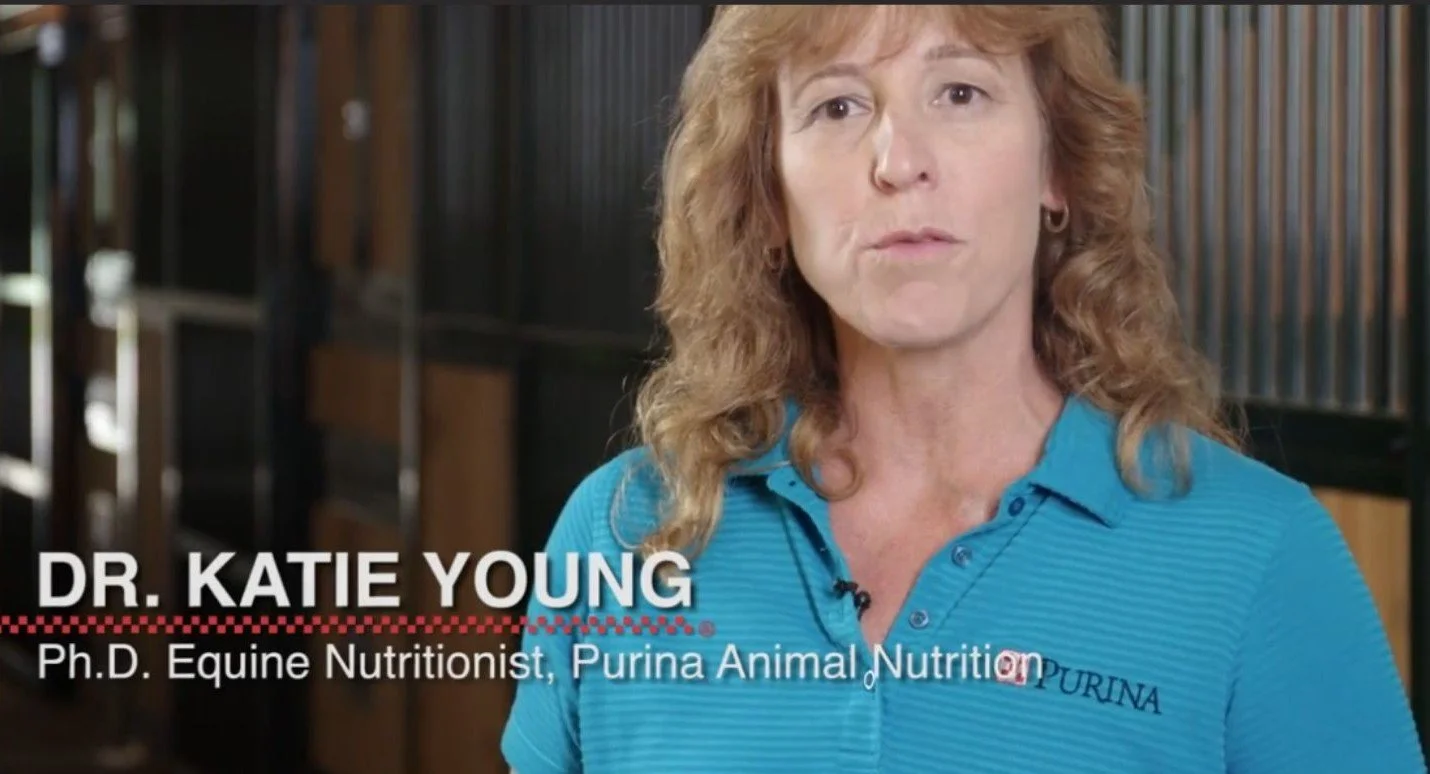
Sometimes it helps to watch a video to understand details of Body Condition Scoring.
Here, Dr Katie Young helps make it easier to understand.
At this body condition, ribs can be easily felt but not prominently seen when standing square and viewed from the side. The horse carries enough body condition to have energy reserves for work, but not so much that extra weight makes hills harder or puts stress on joints.
A horse that’s too thin may struggle with stamina. A horse that’s overweight has to work harder with every step—it’s simple a physics equation W=Fd…some of you just got eye twitchy, didn’t you?
Trail riding may not look like a demanding job from the saddle, but miles of uneven terrain, climbing, descending, and balancing a rider requires strength and endurance.
Forage: The Feed Horses Were Designed to Eat
If horses could design their own diet, it would look very different from the feeding schedules many of them have today.
Horses evolved to graze nearly all day. Their digestive systems expect a slow, steady trickle of forage moving through the gut.
This matters because a horse’s stomach produces acid constantly, and unlike people, horses only produce saliva when they are chewing.
Loaded with bicarbonate, saliva is the horse’s most important natural buffer against stomach acid. The more a horse chews, the more saliva they produce, and the more their gut stays protected.
How Much Forage Does a Horse Need?
Most horses need somewhere around two percent of their body weight in forage each day to maintain weight and healthy gut function. For a thousand-pound horse, that usually means twenty pounds or more of hay or pasture daily. Need the math? 1000 lbs x 0.02=20 lbs
Pasture is a little bit harder to consider for several reasons. Not only is it difficult to quantify how much the horse is actually consuming, but grass also contains a large percentage of water so the horse would have to eat significantly more pasture than hay to take in the same amount of dry matter.
A Small Habit That Can Make a Big Difference
One simple feeding habit can make a surprising difference for trail horses.
Feed hay before you ride.
When a horse eats hay, the fibrous material floats on top of the gastric juice and stomach contents and forms what is referred to as a Forage Mat. This layer can help reduce stomach acid splashing upward during movement. Want to see this in action? Check out this post pinned to the top of my Facebook page, Amber Massey.
That’s particularly helpful during exercise, when climbing hills or moving downhill can shift stomach contents or when the squeeze of abdominal contraction lifts the contents up above the glandular mucosa and onto the very delicate squamous portion of the stomach.
Some riders like to offer a couple pounds of alfalfa before riding because the calcium in alfalfa also has natural buffering properties. However, your best ally when it comes to buffering the acidity of the stomach is promoting chew. Remember what I mentioned earlier? Chew=saliva=bicarbonate=stomach acid buffering.
See why keeping our horses eating (acid buffering) and providing hay (creating a Forage Mat) before a ride is so important?
Is your horse on a diet or a little above a 6 on the BCS Scale? Skip the alfalfa and choose a grass hay—it doesn’t even have to be the softest or best quality, just make it something they have to chew.
Now I’m sure you’re asking, can I feed hay cubes or pellets instead? Check out the photo below for the answer.
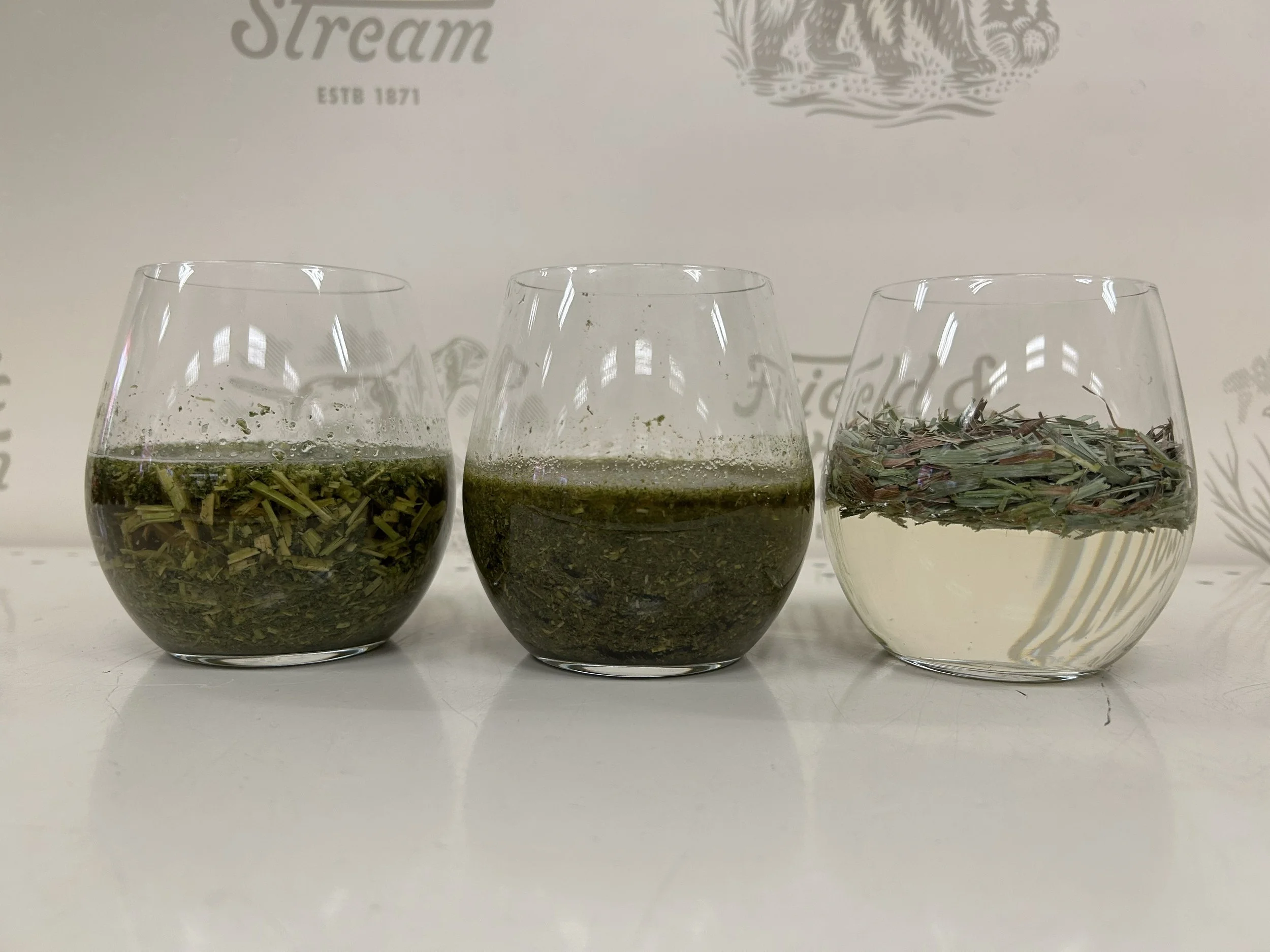
Example of a Forage Mat
If the glass is your horse’s stomach, and the water represents the gastric juices, can you see now why feeding hay is so important?
Hay floats on top in the glass with the hay (far right) whereas the cubes (left) and pellets(middle) make more of a soup.
More Than Calories
It’s easy to think feeding horses is mostly about calories.
But once forage needs are met, the conversation shifts to something equally important—nutrient balance.
Horses require specific amounts of protein, copper, zinc, selenium, vitamin A, vitamin E, and several other nutrients every day. These nutrients support everything from muscle function to immune health, tissue repair, hormone production, and coat quality.
Those numbers printed on the back of a feed bag are there for a reason. Most commercial feeds are formulated so that when the recommended amount is fed for a horse’s weight and workload, daily nutrient requirements are met.
If the feeding rate is reduced too much or even overfed, the balance can be lost.
That’s why understanding your horse’s workload matters as well. A horse ridden lightly once or twice a week has very different nutritional needs than one covering miles of trail several days each week.
Salt: The Nutrient Horses Rarely Get Enough Of
Of all the nutrients horses need, salt might be the one most often overlooked.
Sodium and chloride—what we commonly call salt—play critical roles in muscle function and hydration. They help regulate fluid balance and stimulate a horse’s natural thirst response.
Unfortunately, many horses don’t consume enough salt from a block alone.
A common guideline is about one tablespoon of loose salt per five hundred pounds of your horse’s body weight each day. For the average horse, that usually works out to about two tablespoons daily.
When temperatures rise and horses sweat more, additional electrolytes that use sodium and chloride (or salt) as the first ingredient listed on the label may also be helpful to replace what is lost through sweat.
Supporting Your Partner for the Long Haul
Some supplements can support the longevity of your trail horse for miles to come, but they will never overcome gaps in foundational nutrition.
Trail horses often stay in work for many years, and occasionally a great supplement can play a role in helping them stay comfortable along the way.
Omega-3 fatty acids, particularly those found in fish oil products developed by companies like Kentucky Equine Research, are often used to support a healthy inflammatory response and overall metabolic health.
Vitamin E is another nutrient worth paying attention to, especially for muscle and neurological health.
Horses that spend significant time on green pasture often maintain better vitamin E levels, but research has shown that horses metabolize vitamin E differently. Two horses on the same pasture and the same diet can still have very different blood levels.
For that reason, I always recommend checking vitamin E levels yearly through blood testing, often when getting your fall or spring shots. Doing this in the fall can be particularly beneficial by catching a deficiency before going into the winter months when many horses transition off grass and onto hay, which is naturally very deficient in Vitamin E.
The Miles Ahead
A great trail horse is more than a good ride.
It’s the horse that carries you safely through miles of woods and fields. The one that climbs hills without hesitation and walks quietly home at the end of the day.
Those horses deserve care that supports them for the long journey.
Balanced nutrition. Plenty of forage. The right minerals and salt. Thoughtful feeding habits that keep the digestive system working the way nature designed.
Because when the horse feels good, the ride feels even better.
And as anyone who loves trail riding already knows, there are few things better than watching the sun dip low over the trees while your horse carries you quietly down the path toward home.